TL;DR
- 42% of housing units in Lehi’s 84043 were built in 2010 or later (ACS 2020–2024), so many cold-air complaints come from newer systems.
- First, is it a heat pump? A DOE-hosted guide says heat pumps send gentle, steady warm air and defrost themselves, so cooler air can be normal.
- After snow, ice, or frozen fog, check the plastic vent pipes outside. Lennox’s manual says they can become restricted.
- A new, denser filter can choke airflow and trip the high-limit switch. Ask what rating your system can take.
- Check the warranty before you pay for a part, then call a licensed shop if it’s still cold.
Lehi has a lot of new houses. In ZIP 84043, 42% of housing units were built in 2010 or later (ACS 2020–2024), so many “my furnace is blowing cold air” calls here come from homes where the system is only a few years old. A newer system brings its own set of likely answers: it may be a heat pump rather than a furnace, it probably vents through plastic pipes that snow can block, it may not like the filter you just bought, and it may still be under warranty. This guide covers those newer-home checks. For the full list of causes in any furnace, see why a furnace blows cold air.
Utah HVAC Connect is a matchmaker. We connect homeowners with licensed Utah HVAC contractors; we’re not a contractor, we don’t send technicians, and we don’t quote repairs.
Safety first: if you smell gas or a carbon monoxide alarm sounds, leave the home, then call 911 or Enbridge Gas at 1-800-767-1689 from outside. Don’t troubleshoot.
Why newer Lehi homes are different
Our Lehi page has the full housing breakdown. The two numbers that matter here: most of 84043 was built from 2000 on, and about 16% of occupied homes heat with electricity while 82% use utility gas (ACS 2020–2024, table B25040). The Census doesn’t split electric heat into heat pumps, electric furnaces, or baseboards, and a dual-fuel home that pairs a heat pump with a gas furnace may show up under either fuel. So the first question is what you actually have.
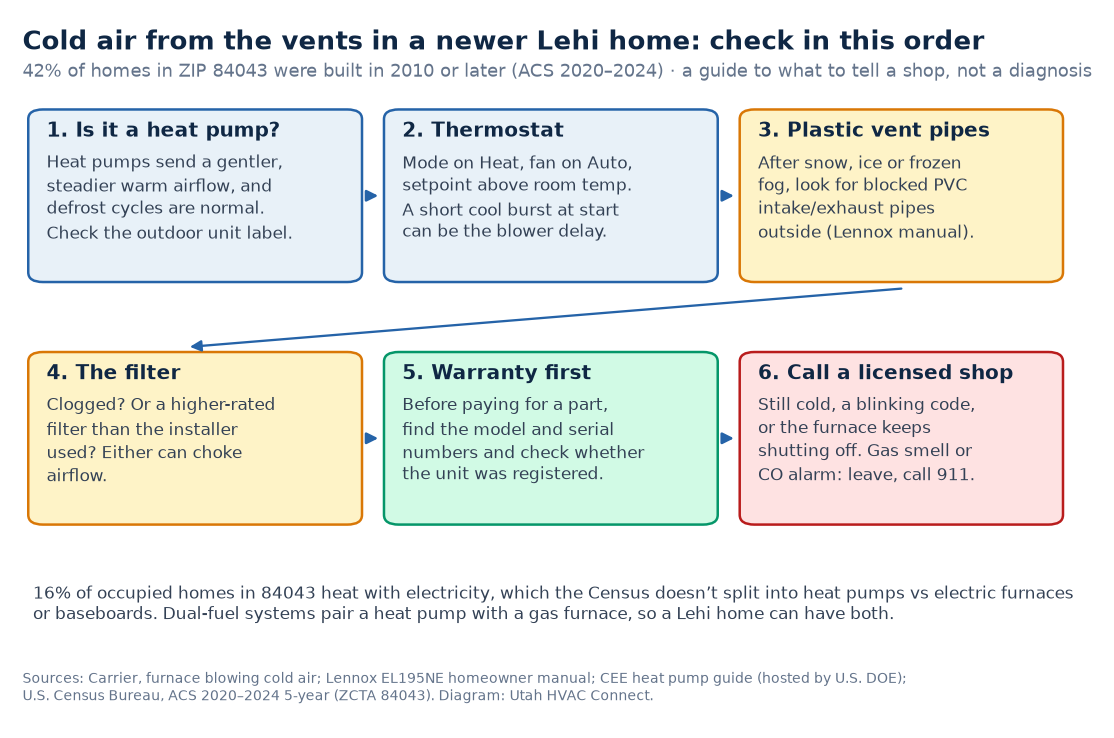
1. Is it a heat pump? Then “cool” air may be normal
Look at the outdoor unit. If it runs in winter while the house is heating, you have a heat pump, either on its own or paired with a furnace (dual fuel). A heat pump guide from the Consortium for Energy Efficiency, hosted by the U.S. Department of Energy, says heat pumps provide “a consistent gentle airflow of warm air” and work best running continuously, while fuel-fired systems deliver hotter air for shorter stretches (CEE / DOE). Air that feels lukewarm on your hand can still be heating the house.
The same guide says heat pumps defrost themselves: below freezing the outdoor coil can frost up, and the system clears it. In a ducted system, supplemental heat may come on during defrost to prevent a gap in heating; a ductless indoor head “may put off some cooling” while it heats the outdoor coil. Meltwater drips at the outdoor unit, so keep it from pooling and refreezing on a walkway (CEE / DOE).
When it’s not normal: the same guide’s signs that a heat pump isn’t working properly include a setpoint that’s never reached, frequent cycling, auxiliary heat constantly showing on the thermostat, frozen indoor or outdoor coils, dirty coils or filters, and a sudden jump in electricity use (CEE / DOE). If you’re weighing heat pump options, see dual fuel vs all-electric and, for Lehi City Power customers, which rebates apply.
2. Thermostat settings
Mode on Heat, fan on Auto, and the setpoint a few degrees above the room. With the fan on “On,” the blower pushes room-temperature air between cycles, and Carrier calls that the most common cause of cold air. Some furnaces also hold the blower for about 30–60 seconds after the burners light (Carrier). If you have a heat pump, the DOE-hosted guide suggests confirming with your installer how the thermostat is set and whether backup heat is programmed to run (CEE / DOE). The full walk-through is in our cold-air checklist.
3. Plastic vent pipes after snow, ice, or frozen fog
High-efficiency condensing furnaces, such as Lennox’s EL195, vent through plastic intake and exhaust pipes instead of a metal flue. Lennox’s homeowner manual for its EL195 furnace says that after any heavy snow, ice, or frozen fog event, the vent pipes “may become restricted,” and to always check them and remove any snow or ice blocking the plastic intake or exhaust pipes (Lennox manual). Note that the list includes frozen fog, not just snowstorms.
- Find where the plastic pipes leave the house, on a side wall or the roof. Check your manual or ask your installer if you’re not sure.
- If they’re buried or iced over, clear them gently by hand. Don’t bang on the pipes or use tools that could crack the PVC.
- Keep drifts and shoveled snow away from them.
- If the furnace still won’t heat after the pipes are clear, call a shop and tell them what you found.
A frozen condensate drain line is a separate problem with the same kind of furnace; it’s covered in our cold-air causes table.
4. The filter, especially a new “better” one
A clogged filter can overheat the furnace until the high-limit switch shuts the burners off while the blower keeps running (Carrier). In newer homes there’s a second version of this problem: a homeowner upgrades to a denser filter than the installer used. Lennox’s manual tells owners to use replacement filters similar in size and efficiency to the originals, because higher-rated filters “may restrict air flow,” which can lower efficiency and wear out the blower motor early (Lennox manual). EPA recommends at least MERV 13 if your system can accommodate it (EPA). The two fit together: ask what your system can take. Our inversion-season filter guide explains the trade-off.
5. Check the warranty before you pay for a part
In a home built in the last decade, the furnace or the failed part may still be covered. Carrier and Goodman, for example, treat the date you closed on a new home as the installation date, and registration can decide whether you get 10 years of parts coverage or 5. Parts warranties generally don’t cover labor. Find the model and serial numbers on the furnace label and your closing date before the visit. Details by brand are in is my builder-grade furnace still under warranty?
6. When to call a licensed shop
- The air stays cold after the checks above, or a heat pump never reaches the setpoint.
- The furnace keeps shutting off, or the control board shows a blinking code. Write the pattern down.
- Anything involving gas, burners, the flame sensor, wiring, or refrigerant. Carrier says not to attempt repairs on gas, electrical, combustion, or internal furnace parts unless you’re qualified (Carrier).
Tell the shop the age of the home, whether it’s a heat pump or dual-fuel system, what you checked, and the warranty details you found. If heat is fully out, start with no-heat help.
Check the license before work starts
Before anyone works on your system, look the company up on DOPL’s free Licensee Lookup & Verification. You want an Active status and an HVAC classification (H100, or the older S350), under the same business name that’s on your estimate. Step-by-step: how to check a Utah HVAC license.
How matching works
- Tell us what you need on the free Get Help form: service type (Repair, or “I’m not sure”), urgency (Today, This week, or Planning), your ZIP, and when it’s reasonable to reach you.
- We match licensed Utah shops that serve your ZIP. We don’t dispatch technicians, diagnose, or write proposals.
- Matched pros may reach out using the contact details you provide. You talk with them, compare, and hire who you want, or no one. No homeowner fee and no obligation. More: how it works and how we make money.
Related guides
- Furnace repair in Lehi (84043): housing data, utilities, and permits
- Furnace not working? No-heat help in Utah: safety first, basic checks
- Why is my furnace blowing cold air?: all nine causes, statewide
- Is my builder-grade furnace still under warranty?
- Lehi City Power vs Rocky Mountain Power: which heat pump and AC rebates apply
- Inversion season: furnace filters and airflow
How we put this page together
This page was written by the Utah HVAC Connect editorial team, not by a contractor. We used public data only: NOAA 1991–2020 climate normals, U.S. Census Bureau American Community Survey (ACS) estimates, and the rebate, permit, and licensing pages published by Utah utilities, cities, and DOPL, each checked on the date shown above. For this article we started from the cold-air causes on our statewide guide and kept only what’s different in a newer home. We read a furnace maker’s homeowner manual and a DOE-hosted heat pump guide in full and pulled Lehi’s housing and heating-fuel data. We don’t publish prices we can’t source, contractors can’t pay to be mentioned here, and we don’t name partner shops on this page. Programs and rules change, so confirm details with the program or your contractor before you sign anything. See our editorial policy. Spot an error? Email hello@utahhvacconnect.com.
Sources
- U.S. Census Bureau, ACS 2020–2024 5-year, ZCTA 84043, via Census Reporter
- U.S. Census Bureau, ACS 2020–2024 5-year, tables B25034, B25035, B25040 (ZCTA 84043), via Census Reporter API
- Consortium for Energy Efficiency, “You installed an air source heat pump. Now what?” (hosted by U.S. DOE, PDF)
- Lennox, EL195NE homeowner manual (PDF)
- Carrier, furnace blowing cold air
- Carrier, troubleshooting a furnace
- U.S. EPA, What is a MERV rating?
- Utah DOPL, Licensee Lookup & Verification
Questions about the service: hello@utahhvacconnect.com.
FAQ
Why is my new furnace blowing cold air?
Things to check in a newer home: it’s actually a heat pump delivering gentler warm air or running a defrost cycle; the thermostat fan is on “On”; snow, ice, or frozen fog is blocking the plastic vent pipes; or the filter is clogged or more restrictive than the system was built for. If the checks don’t fix it, call a licensed shop.
Is it normal for a heat pump to blow cooler air than a furnace?
Yes, to a point. A heat pump guide hosted by the U.S. Department of Energy says heat pumps deliver a consistent, gentle airflow of warm air, while fuel-fired furnaces deliver hotter air in shorter bursts. If the house never reaches the setpoint, that’s a reason to call the installer.
Can snow stop my furnace from working?
It can on a high-efficiency furnace. Lennox’s homeowner manual says that after heavy snow, ice, or frozen fog the plastic vent pipes may become restricted, and tells owners to check them and clear any snow or ice. If the furnace still won’t heat after they’re clear, call a shop.
I upgraded my filter and now the air is cooler. Why?
A more restrictive filter can cut airflow, and low airflow can trip the furnace’s high-limit switch so the burners shut off while the fan keeps running. Lennox’s manual tells owners to use filters similar in efficiency to the installer’s. Ask a technician what rating your system can take.
Is my Lehi furnace still under warranty?
Possibly. For a new home, manufacturers such as Carrier and Goodman treat the closing date as the installation date, and registration affects whether parts coverage is 10 years or 5. Labor usually isn’t covered. See our builder-grade warranty guide.
Do you send a technician to Lehi?
No. We’re a matchmaker: we connect homeowners with licensed Utah HVAC shops that serve their ZIP. We don’t dispatch, diagnose, or quote. The request is free, with no obligation to hire, and we can’t promise a match for every address.